
Everyone gets angry at times. However, some people experience anger that becomes so intense and sudden that they lose control completely. This condition is known as Intermittent Explosive Disorder (IED). People with this issue often react far more strongly than a situation demands, leading to serious problems in relationships, work, and daily life.
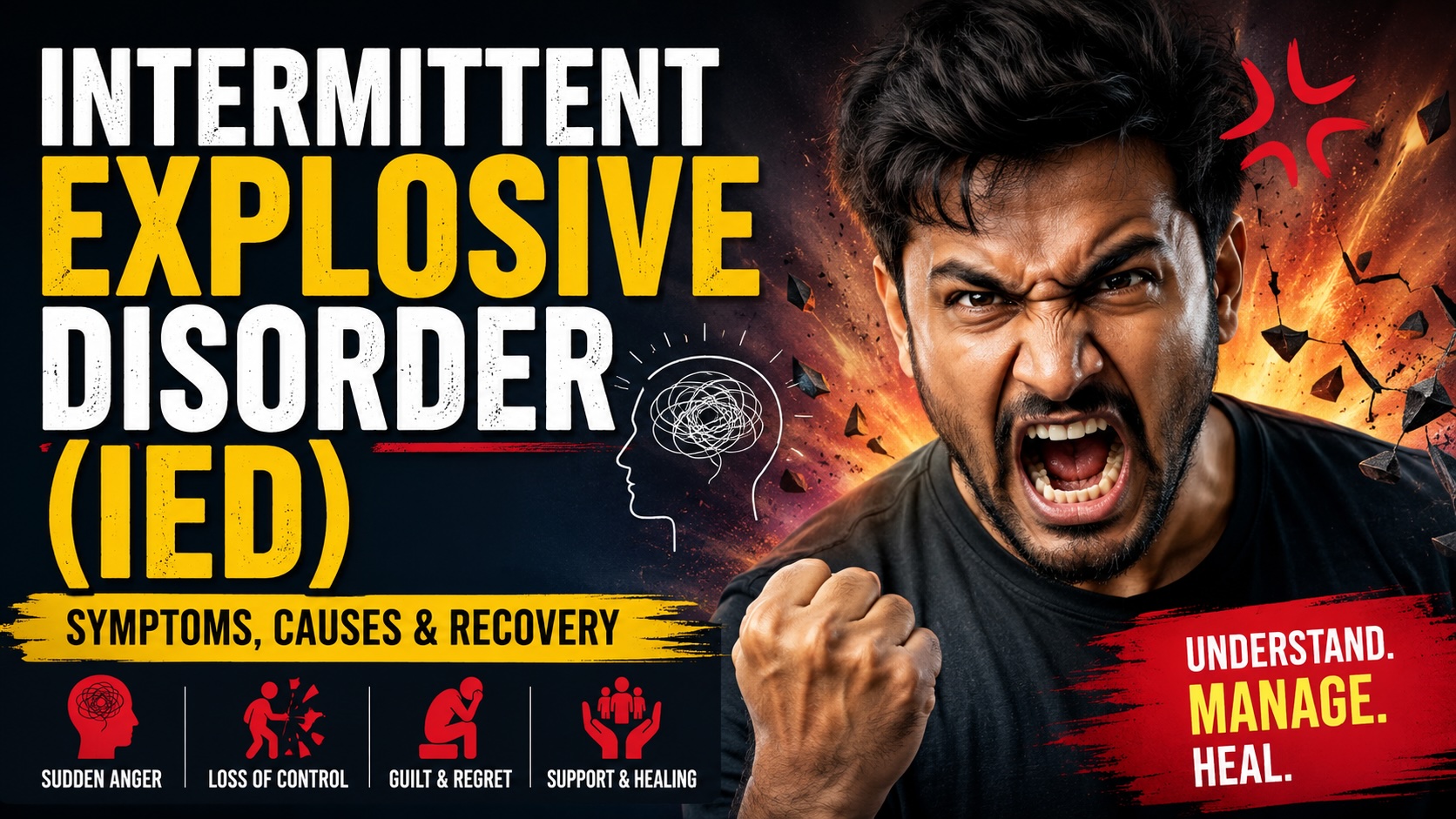
What Is Intermittent Explosive Disorder?
Intermittent Explosive Disorder (IED) is a condition in which a person experiences repeated episodes of extreme anger that seem out of proportion to the actual trigger. The anger usually appears suddenly and feels difficult or impossible to control.
For example, a small disagreement, a delay, or a minor mistake may trigger an explosive reaction. During these episodes, the person may feel overwhelmed by anger and act impulsively without thinking about the consequences.
Common Symptoms of Intermittent Explosive Disorder
Explosive Anger Over Small Issues
A person may:
- Become extremely angry over minor frustrations
- Lose temper very quickly
- Feel unable to control the anger once it starts
Verbal and Physical Aggression
During an outburst, the person may:
- Shout or scream
- Threaten others
- Use abusive language
- Throw objects
- Break household items
- Hit walls, doors, or furniture
- Get involved in physical fights
These reactions often happen suddenly and may surprise both the individual and the people around them.
Signs Before an Angry Outburst
Many people with having this problem notice certain feelings before they explode.
Common signs include:
- Irritation when people talk or move around them
- Intense body tension
- Racing thoughts
- Sudden increase in energy
- Feeling that they can no longer “hold it in”
Recognising these early signs can help a person seek support before an outburst occurs.
What Happens After the Outburst?
Interestingly, many people feel calm after expressing their anger.
Some may:
- Sit quietly and peacefully
- Feel relieved
- Experience guilt or shame
- Wonder why they reacted so strongly
- Struggle to remember parts of the incident
The emotional crash after the explosion often creates confusion and regret.
Possible Causes of Intermittent Explosive Disorder
There is no single cause of Intermittent Explosive Disorder. Several factors may contribute.
Growing Up in a Violent Environment
People raised in homes with frequent arguments, aggression, or violence may learn explosive ways of expressing emotions.
Long-Term Emotional Suppression
Some individuals spend years suppressing hurt, fear, disappointment, or anger. Over time, these emotions may build up and come out as intense anger episodes.
Lack of Emotional Understanding
Children who grow up with emotionally unaware parents may not learn healthy ways to manage difficult feelings. This can affect emotional regulation later in life.
Biological Factors
Research suggests that brain chemistry and genetic influences may also play a role in the development of Intermittent Explosive Disorder.
Recovery Is Possible
The good news is that recovery is possible. Early identification, emotional awareness, counselling, and strong family support can make a significant difference. When family members understand the problem and provide support instead of criticism, improvement often happens much faster.
Learning healthier ways to express emotions can help individuals regain control and build more peaceful relationships.