
Religious OCD is a subtype of Obsessive-Compulsive Disorder (OCD), similar to Relationship OCD, Sexual OCD, and Homosexual OCD. In this condition, a person experiences uncontrollable religious thoughts and repetitive behaviours that create intense anxiety. These thoughts are unwanted, distressing, and often go against the person’s own beliefs and values.
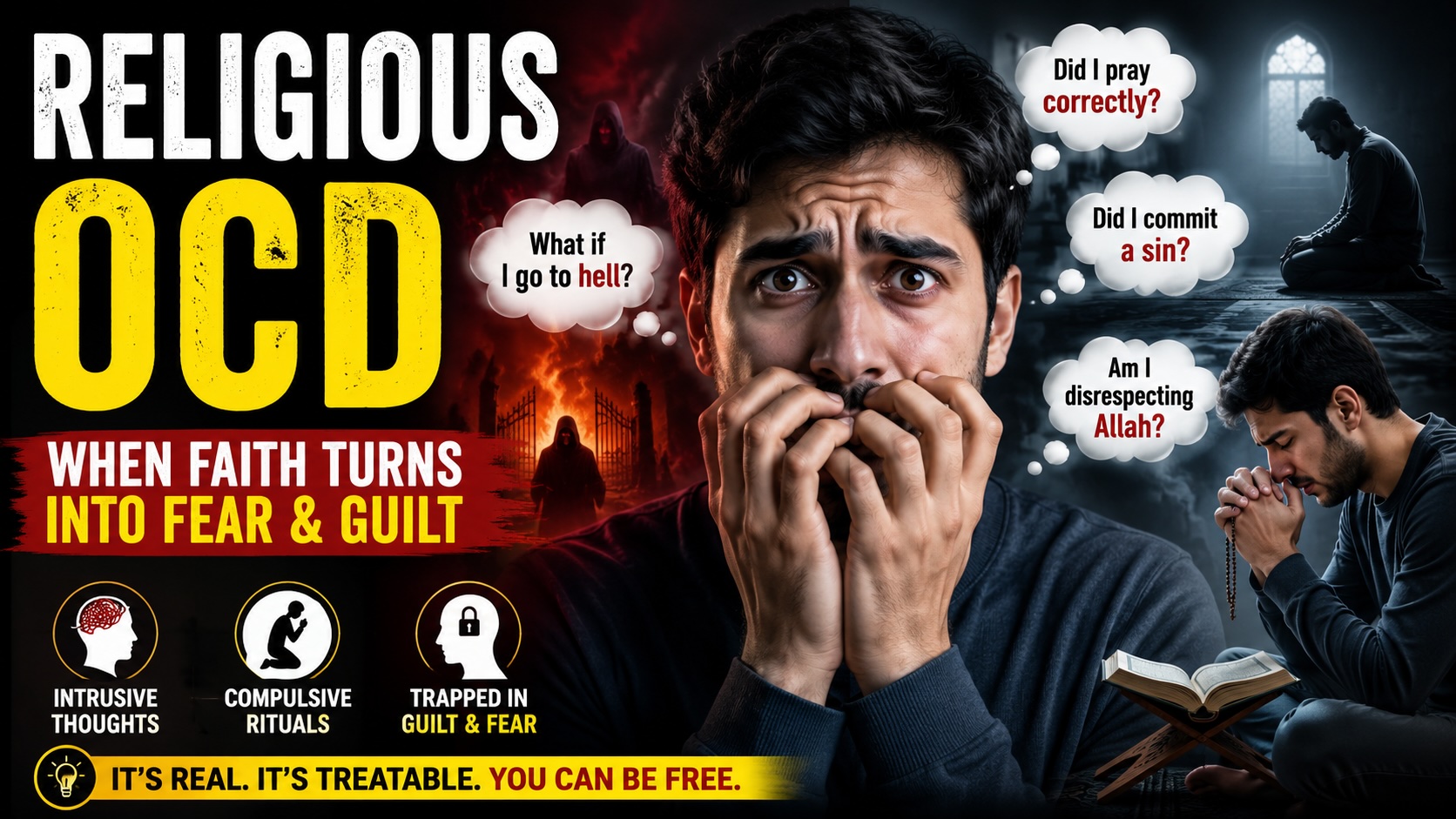
Symptoms of Religious OCD
People with Religious OCD often struggle with obsessive thoughts such as:
- Constant fear of hell or punishment after death.
- Fear of committing sins, even for small or unintentional mistakes.
- Repeated doubts about whether prayers or religious rituals were performed correctly.
- Persistent fear of insulting or disrespecting God.
- Excessive guilt without a clear reason.
- Intrusive sexual or blasphemous religious thoughts that feel completely opposite to their personality and values.
- Repetitive “What if this happens?” thoughts related to religion and morality.
These thoughts are not a reflection of the person’s character. Instead, they are symptoms of OCD.
Compulsive Behaviours
To reduce anxiety, many people develop repetitive behaviours such as:
- Repeating prayers until they feel “perfect.”
- Asking for forgiveness again and again.
- Continuously checking with family members, religious leaders, or the internet to confirm whether they have done something wrong.
- Repeating religious rituals unnecessarily to feel relieved.
Unfortunately, these compulsions provide only temporary relief and make the OCD cycle stronger over time.
What Causes Religious OCD?
The causes of Religious OCD can be broadly classified into biological, psychological, and social factors. However, in many clinical cases, childhood experiences play a significant role.
Children who receive fear-based or guilt-based religious education may become highly sensitive to religious mistakes. At a young age, the mind processes vivid images very literally. Frightening descriptions or mental imagery of punishment after death may remain deeply stored in memory. Later in life, even small mistakes can trigger intense fear and guilt because those childhood associations become activated.
This does not mean that religion itself causes OCD. Rather, the combination of individual vulnerability and fear-based learning can contribute to the development of obsessive symptoms.
Associated Mental Health Problems
Many individuals with Religious OCD also experience other anxiety-related conditions, including:
- Panic attacks
- Fear of having a heart attack
- Fear of heights
- Claustrophobia (fear of enclosed spaces)
- Generalised anxiety and excessive worry
These conditions may occur together and increase emotional distress.
Supporting Children in a Healthy Way
Whether teaching religion, science, or patriotism, children learn best through understanding, compassion, and age-appropriate guidance. Fear, punishment, and excessive guilt should never become the primary methods of education. A secure emotional environment helps children develop healthy beliefs without overwhelming anxiety.
Can Religious OCD Be Treated?
Yes. Religious OCD is a treatable condition. With appropriate psychological treatment, many people experience significant improvement and regain control over their lives. Compared with some other OCD subtypes, treatment may take more time because the symptoms often involve deeply held beliefs and intense emotional fear. However, recovery is possible with the right therapeutic approach.
If repetitive religious thoughts, guilt, or compulsive rituals are affecting your daily life, seeking professional psychological support can make a meaningful difference. Early intervention often leads to better outcomes.