
Many people confuse Sexual OCD or CSBD because both conditions involve sexual thoughts. However, they are fundamentally different psychological conditions. Misunderstanding them can create unnecessary fear, stigma, and even delay the right treatment.
After learning about Compulsive Sexual Behaviour Disorder (CSBD), some people become worried that they may have the same condition. In reality, many individuals who seek professional help actually experience Sexual OCD (SOCD), not CSBD. Understanding the differences can help you identify the problem more accurately.
What is Sexual OCD?
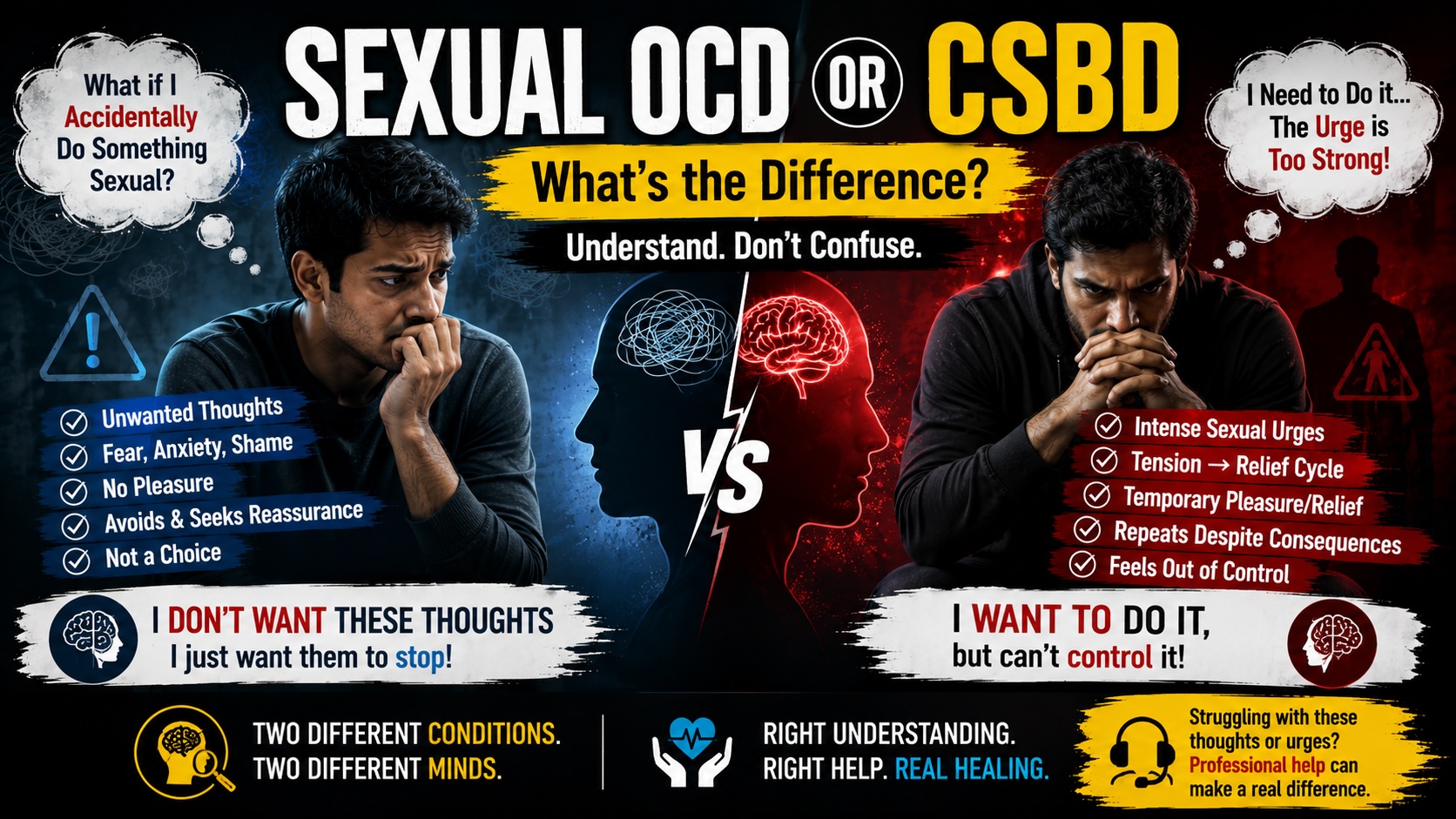
Sexual OCD (SOCD) is a subtype of Obsessive-Compulsive Disorder (OCD). The person experiences unwanted, intrusive sexual thoughts that cause intense anxiety. These thoughts are completely against the person’s values, and they desperately want them to stop.
The fear is not about wanting to act. The fear is about accidentally doing something they never want to do.
What is Compulsive Sexual Behaviour Disorder?
Compulsive Sexual Behaviour Disorder (CSBD) involves repeated sexual urges and behaviours that become difficult to control. The person often experiences strong internal sexual tension and may engage in sexual behaviour to temporarily reduce that tension, despite harmful consequences.
Unlike Sexual OCD, the struggle in CSBD is primarily with impulse control rather than fear of unwanted thoughts.
Sexual OCD or CSBD: A Simple Example
Imagine two people travelling on a crowded bus. Both notice an attractive stranger.
Sexual OCD (SOCD)
The person immediately becomes frightened and starts thinking:
“What if I suddenly touch this person without meaning to?”
The thought creates panic, shame, anxiety, and guilt. They may repeatedly check their behaviour, avoid eye contact, or leave the situation. Their greatest fear is becoming someone they believe they are not.
Compulsive Sexual Behaviour Disorder (CSBD)
A person with CSBD may experience intense sexual urges and internal pressure. Their struggle centres on controlling these urges rather than fearing unwanted thoughts. Some individuals describe feeling overwhelming tension that they want to relieve, even though they know acting on it could have serious personal or legal consequences.
Emotional Experience is Completely Different
One of the biggest differences in Sexual OCD or CSBD is the emotional experience.
People with SOCD usually experience anxiety, fear, shame, guilt, and repeated self-doubt before, during, and after the intrusive thought. The thoughts themselves do not provide pleasure.
People with CSBD often describe intense sexual tension before the behaviour. The behaviour may provide temporary relief or gratification, followed later by regret, guilt, or shame.
Different Goals, Different Problems
People with SOCD constantly try to convince themselves that they are not dangerous and would never want to act on their intrusive thoughts.
People with CSBD usually want to stop the overwhelming internal pressure and regain control over repetitive sexual behaviours.
Although both conditions require professional assessment, they involve very different psychological processes.
Why Accurate Diagnosis Matters
Confusing Sexual OCD or CSBD can lead to unnecessary fear and inappropriate treatment. Someone with SOCD often suffers silently because of terrifying thoughts they never want to act on, while someone with CSBD needs help managing repetitive sexual urges and behaviours.
Both conditions are treatable with appropriate psychological intervention. If unwanted sexual thoughts or behaviours are causing significant distress or affecting your daily life, seek assessment from a qualified mental health professional. An accurate diagnosis is the first step towards effective treatment and recovery.