
Have you ever noticed how a tiny thought can change your entire mood? You wake up normal, but one incident happens and suddenly you feel negative, low, and uninterested in everything. This mental pattern is called Spiralling Thoughts, and many people experience it without knowing what is happening inside their mind.
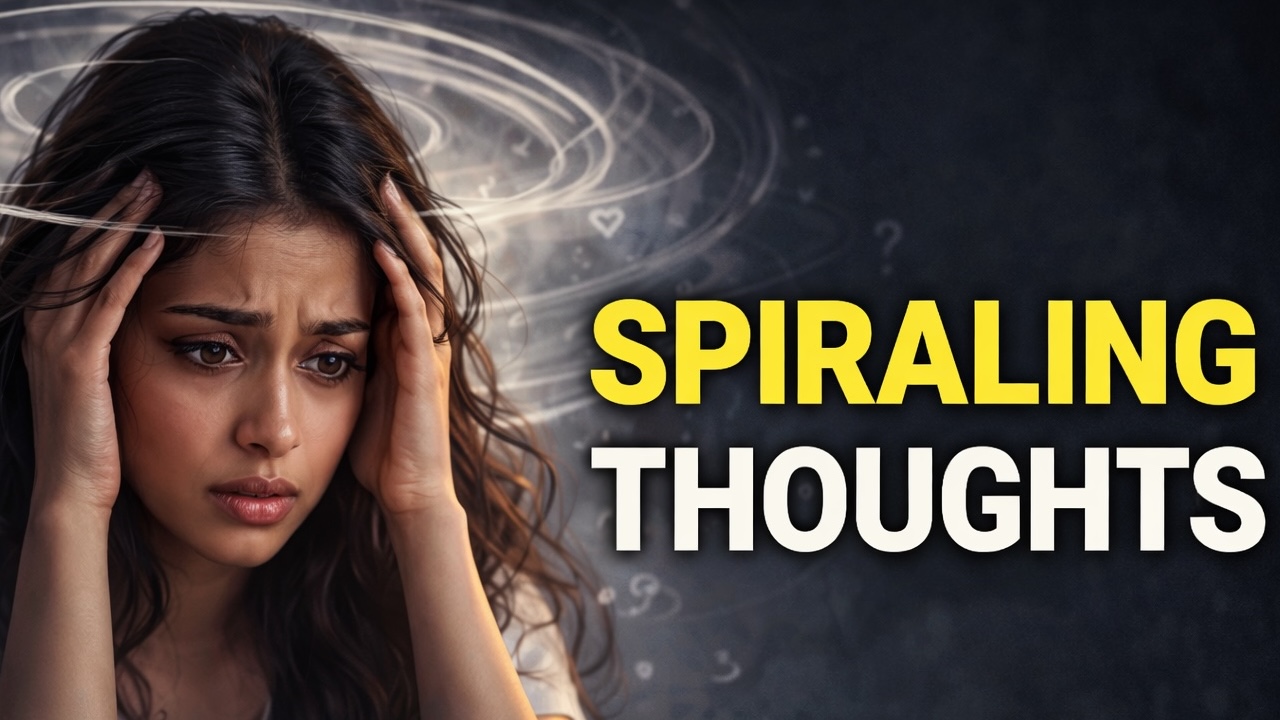
What Are Spiralling Thoughts?
Spiralling Thoughts occur when one simple trigger leads to a chain of increasingly negative conclusions. Your mind moves from a small situation to extreme emotional meanings within minutes.
For example, you send a message to someone you care about — a friend, partner, or loved one. The message gets read, but there is no reply. That is where the spiral begins.
Your mind may go like this:
“They didn’t reply.” → “They are ignoring me.” → “They don’t care about me.” → “Everyone treats me like this.” → “I am always alone.” → “I have nobody.”
See how the mind travelled? It started from an unanswered message and ended in loneliness and hopelessness. This is a classic Spiralling Thoughts pattern.
This Is Not Weakness — It Is Survival Mode
People often think spiraling means they are emotionally weak. That is not true. Your brain activates survival mode due to earlier emotional experiences or unresolved pain.
Your mind learned somewhere in the past that certain emotional situations are dangerous. So it tries to protect you by predicting rejection, loss, or abandonment. But instead of protecting, this process creates emotional damage.
You may also feel physical symptoms like increased heartbeat, chest heaviness, restlessness, or stomach discomfort. The body reacts as if there is real danger, even though the threat exists only in thoughts.
Spiralling Is an Emotional Loop
Spiralling Thoughts form a loop with a clear beginning and end. It starts with a trigger and ends in a painful emotional state like loneliness, shame, fear, or worthlessness.
In the example above, loneliness is the final emotional state. The mind believes you cannot handle that emotional pain, based on previous memories. So it overreacts early.
However, loneliness is only one example. For some people, the final thought may involve embarrassment, social judgment, or fear in crowded places. Each person’s spiral looks different.
How Do We Solve Spiralling Thoughts?
You cannot fix spiraling by only telling yourself to “think positive.” Real change happens when you identify:
-
The trigger
-
The final emotional state
-
The past memory connected to it
Every individual requires a customised solution because the root emotional pain differs. With proper guidance, the subconscious mind can learn to tolerate and even stay calm in situations that previously caused spiraling.
Final Note
If Spiralling Thoughts frequently affect your daily life, professional consultation can help you break the loop safely and effectively. You can train your mind to respond differently.