
Have you ever felt, “Why do I feel like something is wrong with me?” even when you cannot identify a specific problem? Many people experience a strange inner discomfort that they find difficult to explain. They may feel anxious, sad, restless, ashamed, emotionally heavy or simply “not normal”.
This experience can be confusing, particularly when it appears suddenly.
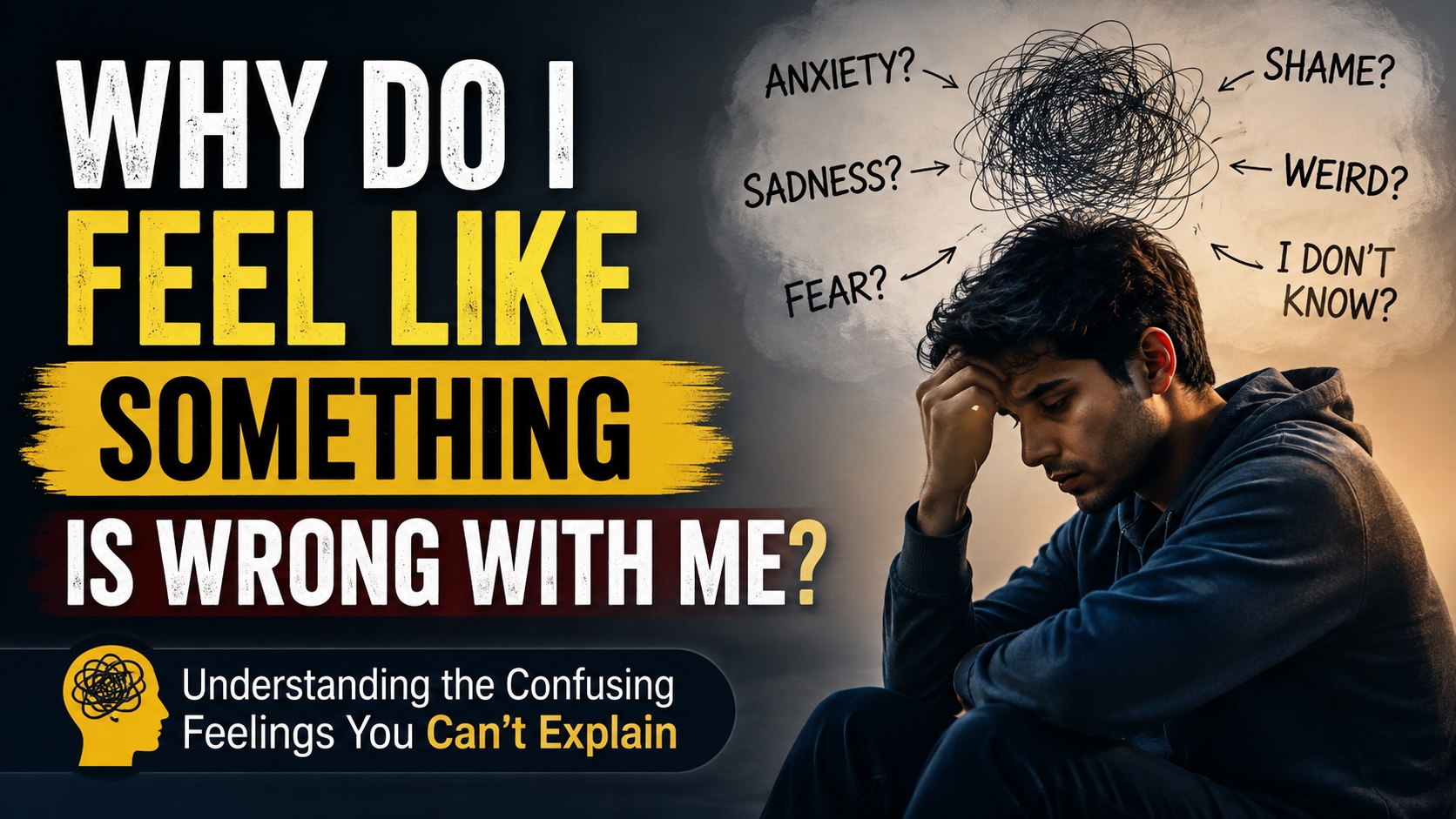
Why Do I Feel Like Something Is Wrong With Me?
Sometimes, the mind experiences several emotions at the same time. Fear, sadness, anger, guilt, shame and loneliness can become mixed together, making it difficult to identify one specific emotion.
For example, a person may be dealing with relationship stress, work pressure and unresolved personal experiences. When another stressful situation occurs, these emotions can become activated together. The person may then think, “Why do I feel like something is wrong with me?”
This does not necessarily mean that the person has a mental disorder. It may indicate that they are experiencing emotional distress that they have not yet understood clearly.
How Anxiety Can Create This Feeling
Anxiety does not always feel like obvious fear. Some people experience anxiety mainly as an uncomfortable internal sensation.
They may notice:
- Increased heartbeat
- Restlessness
- Difficulty concentrating
- Tightness in the chest
- Constant worrying
- A feeling that something bad may happen
- Difficulty relaxing
- A strange or unfamiliar feeling
When the person cannot understand these sensations, they may become frightened by them. This can increase anxiety further.
The cycle can look like this:
Unfamiliar feeling → Anxiety → Increased body sensations → More worry → More anxiety
As this cycle continues, the person may repeatedly ask, “Why do I feel like something is wrong with me?”
Can Unprocessed Emotions Cause This Feeling?
Unprocessed or poorly understood emotions can contribute to emotional discomfort. A person may have experienced difficult situations but never had the opportunity to understand or express the associated emotions.
However, we should be careful with the idea that every unexplained feeling represents “suppressed emotions”. Anxiety, depression, adjustment difficulties, trauma-related reactions, sleep problems and other psychological or physical factors can also produce similar experiences.
Therefore, it is more useful to explore the experience rather than immediately label its cause.
Learning to Identify What You Feel
When you experience unexplained emotional discomfort, try asking yourself:
“What happened just before I started feeling this way?”
Then notice:
- What thoughts are coming to my mind?
- What sensations am I experiencing in my body?
- Am I feeling afraid, sad, angry, guilty or ashamed?
- Do I feel emotionally overwhelmed?
- Am I avoiding something because of this feeling?
Putting words to emotions can make an unfamiliar experience easier to understand.
When Should You Seek Professional Help?
If this feeling happens frequently, becomes intense, affects your work or relationships, disturbs your sleep, or makes daily activities difficult, consider speaking with a mental health professional.
Professional assessment can help identify whether anxiety, emotional distress, depression, trauma-related difficulties or another issue is contributing to the experience.
Most importantly, feeling that something is wrong with you does not automatically mean that something is fundamentally wrong with you. Sometimes, it simply means that your mind is experiencing something that needs to be understood.
Understanding the emotion behind the discomfort can be the first step towards feeling more in control.